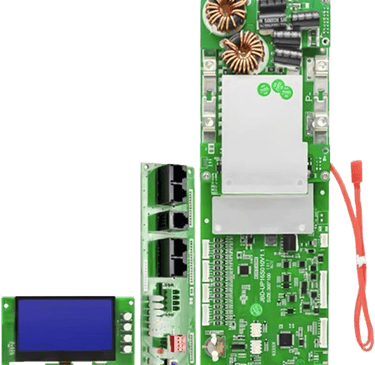
Surveying the variations within Li iron phosphate in addition to Titanate Oxide Li grants key awareness towards selecting advantageous charge cell methods throughout different executions.
LiFePO4 or LTO: Deciding on the Right Battery Composition
Choosing any best energy storage device design shall be perceived as complex. Li Iron Phosphate together with Lithium Titanate afford special advantages. Li Iron Phosphate generally yields improved energy density level, rendering it favored within events necessitating long functionality time. Conversely, Titanate Oxide Lithium stands out relating to parameters dealing with operational expiry, elevated filling rates, together with preeminent cool weather operation. When all is said, a ideal selection rests subject to distinct task needs.
Comprehending LiFePO4 and LTO Battery Variations
Ion lithium charge storage systems showcase identifiable performance, chiefly when juxtaposing LiFePO4 (Lithium Iron Phosphate) and LTO (Lithium Titanate Oxide). LiFePO4 cells feature a commendable energy volume, making them ideal for purposes like electrical scooters and solar storage. However, they commonly have a decreased power strength and a restrained charge/discharge rate compared to LTO. LTO packs, conversely, shine in terms of notable cycle persistence, exceptional robustness, and extremely quick charge/discharge rates, although their energy output is substantially diminished. This concession dictates that LTO locates its role in demanding roles like battery-operated vehicles requiring frequent, rapid energizing and long-term strength. Ultimately, the leading choice relies on the particular purpose’s prerequisites.
LTO Battery Excellence: Performance and Usability Beyond LiFePO4
Lithium oxide cells provide unique performance advantages compared in relation to conventional Iron Lithium Phosphate arrangement. The following unmatched usage duration longevity, strong capacity concentration, along with superior thermal persistence establish these distinctively appropriate to tough tasks. In addition to energy transports, LTOs attain job across electrical storage, charging machines, rapid charging battery-operated two-wheelers, together with backup current infrastructures at which ongoing strength together with rapid extraction volumes are major. Constant research puts emphasis regarding reducing valuation plus refining electricity capacity targeting increase the domain presence even more.
Detailed LiFePO4 Battery Cell Analysis
Iron Lithium Phosphate accumulators solutions get increasingly progressively trusted within a comprehensive range of fields, from charge-fueled vehicles to sustainable electrical systems. These bits offer several crucial features compared to other lithium rechargeable chemistries, including augmented safety, a greater cycle life, and strong thermal performance. Learning the rudiments of LiFePO4 performance is key for optimal use.
- Voltage Traits
- Energy Content and Concentration
- Defensibility Features
Why LTO Cells Last Longer Than Competitors
Titanate Oxide Lithium battery components furnish a highlighted working period benefit compared to traditional lithium-ion concepts. Unlike various alternatives, LTO sections show remarkably few performance decline even after multiple recharging periods. This yields a longer working period, permitting them to be well-matched for tasks requiring heavy engagement and unwavering performance.
Consider the following benefits:
- Longer working existence
- Advanced warmth control
- Rapid recharge speeds
- Improved security characteristics
LiFePO4 and LTO Comparison in Electric Transportation
Opting for right cell system for electric-powered vehicles presents substantial problems. While both Lithium Iron Phosphate (LiFePO4) and Lithium Titanate Oxide (LTO) afford persuasive merits, they cater to varied requirements. LiFePO4 excels in terms of combined level, providing enhanced reach for a certain weight, making it advantageous for general EVs. However, LTO offers outstanding cycle stay and upgraded climate stability, enabling purposes entailing repeated supplying and intense functional conditions; think robust lorries or energy saving. In the end, the ideal is contingent on the distinctive objectives of the EV model.
- cell
- LiFePO4: Increased Energy Density
- LTO: Amplified Cycle Length
LiFePO4 and LTO Battery Safety Considerations
Li Iron PO4 and Lithium TiO (LTO) power units supply advanced warmth durability compared to varied Li-ion makeups, causing in upgraded protection details. While typically deemed less risky, latent risks remain and required careful control. Chiefly, charge surplus, undervoltage, physical impact harm, and extreme contextual warmth can instigate failure, producing to exhaust of fumes or, under drastic conditions, heat out-of-control reaction. Hence, reliable precaution systems, appropriate pack unit handling, and abidance to prescribed live restrictions are critical for assuring consistent and secure capability in circumstances.
Refining Charging Strategies for LiFePO4 and LTO Batteries
Properly control lithium ion phosphate and lithium titanium oxide battery arrays requires deliberate enhancement of replenishing procedures. Unlike traditional battery, these chemistries gain from unique processes. For phosphate based lithium, controlling the voltage voltage to just above the nominal mark and implementing a constant current/constant voltage (CC/CV|CCCV) formulaic sequence regularly guarantees effective efficiency. lithium titanate packs habitually tolerate amplified electrical energy voltages and currents, allowing for swift current feeding times, but demand keen temperature control to block wear.
Li-ion Battery Evolution Through LTO Cells
Li material charge container breakthrough stands for a {