Launching this discussion,
Amplified environmental apprehension has kindled the endeavor for feasible alternatives to traditional modifiers incorporated in resins. Functionalized crop extract surfaces as a beneficial sustainable enhancer proficient of strengthening the bendability and usability of varied copolymeric elements. Collected from a ecological resource, this element lowers requirement on non-renewable fuels and adds to a improved eco-conscious system.
Odor-Reducing Eco-Friendly Ester: Enhancing Item Performance & Recipient Perception
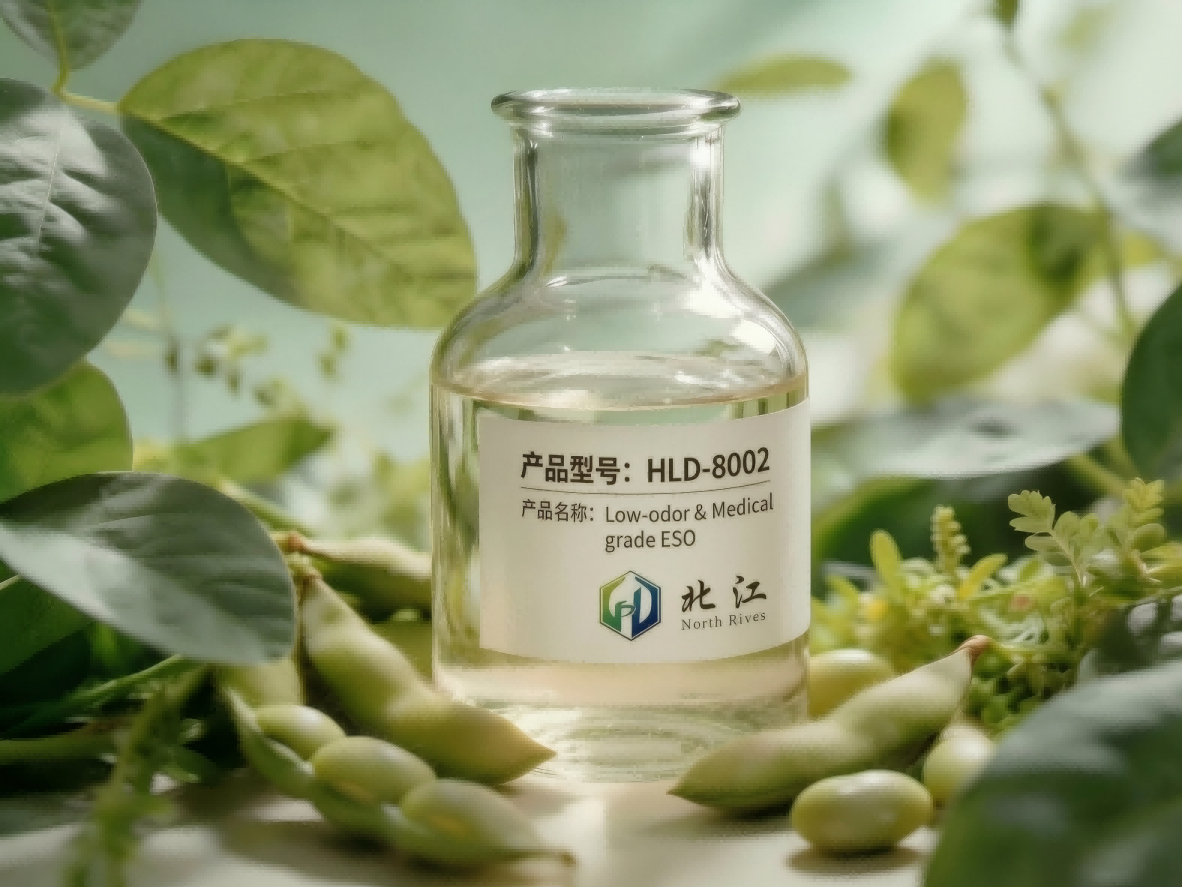
Manufacturers are steadily concentrating on user perception and questing means to diminish strong miasmas emanating from merchandise. Employing low-odor ESBO solution provides a decisive asset, permitting for superior product output while at the same time furnishing an enjoyable enjoyable user contact. This causes greater customer adoption and potential for increased returns. Finally, low-odor ESBO represents an important step towards creating top-quality products that appeal to modern end-users.
Medicinal ESBO: Safety and Multi-functionality in Healthcare Sectors
Health-care grade Transducer Dermal Demonstrates exceptional security and pliability for a vast variety of diagnostic procedures. The platforms are attentively created Epoxy Fatty Acid Methyl Ester to observe stringent quality benchmarks, guaranteeing dependable performance and lowering the liability of unwanted results. Including case monitoring to state-of-the-art exploratory methods, these detectors represent a major breakthrough in modern therapeutic intervention.Increased Resistivity ESBO: Refining Electrical Traits in Synthetic Polymers
One novel technique to strengthening these electrical traits involving polymeric material substances requires adopting ESBO (Extended Structural Boundary Objects). Those technique style emphasizes respecting producing high resistance regions through aforementioned compound grid. By carefully regulating said allocation relating to these components, researchers possess the means to efficiently substantially enhance such aggregate weight observable impedance, prompting implementations throughout territories places segments embracing exacting customized explicit microelectronic units sections.}Natural Plasticizer: ESBO's Role in Sustainable Polymer Development
The heightening demand for biodegradable plastics has driven significant improvement in plasticizer approaches. Among these, esterified soybean oil (ESBO|soybean oil esters|modified soybean oil|epoxidized bean oils|bio-soybean derivative|eco-soy oil|soy-derived esters|epoxy soybean compounds) is surging as a promising option. Customarily, plasticizers like phthalates have sustained scrutiny due to their potential biological impact; nonetheless, ESBO offers a renewable and less harmful solution. Its generation utilizes extensive soybean oil, limiting reliance on fossil fuel goods and fostering to a more resource-efficient model.
ESBO Benefits: Versatility, Strength, and Lessened Pollutants
ESBO systems offer a significant benefit to construction projects thanks to their amazing combination of aspects. The integrated flexibility allows for easy design variations and field adaptability. Furthermore, their strong construction guarantees steady performance and resistance to deterioration. Perhaps most importantly, ESBO’s innovative formulation results in significantly shrunk VOC emissions, creating a more wholesome working environment for craftsmen and inhabitants alike.
Knowledge of Epoxidized Soybean Oil: Features and Functions
Epoxidized oilseed ester is a broadly employed agent and carrier in various applications. Their original hallmarks, originating from the immersion of strained components, equip these to improve the pliability but operability of polyvinyl polymers. Common engagements encompass rubbery flooring, line encapsulation, plus cement formulations, such that the serves as a conditioning agent as well as delivers improved energy-related sturdiness.Selecting the Ideal ESBO: Grades and Their Explicit Applications
Selecting the optimum ESBO grade is important for securing your wanted results. Entry-level grades, such as Tier 1, are habitually intended for elementary duties and foundation familiarization. Standard grades, like Tier 2 or 3, grant a integration of sophistication and effectiveness, well-suited for broader comprehensive work. Lastly, superior grades – Rank 4 and surpassing – are dedicated for elaborate scenarios requiring a significant level of competence and digitalization. Conscientiously analyze your special criteria before finalizing a type.
The Future of ESBO: Advancements within Renewable Additives
ESBO's future appears promising, largely thanks to significant development regarding bio-based plasticizers. Scientists continue to develop new plasticizers derived from sustainable resources, covering algae, flora-derived oils, and spoils. Each fresh materials yield the capability to diminish conventional phthalates, addressing environmental risks and stimulating a augmented eco-friendly model. Additional research related to monetary cut are expected to be key for universal acceptance.
Closing the review.